
Welcome. Navigating perimenopause and menopause can be challenging – but you don’t have to do it alone. Our team of healthcare provider experts offers comprehensive, compassionate and evidence-based care to support your individual health and well-being.
Our dedicated center offers you:
You will receive care from board-certified physicians and our nurse practitioners, including Susan Angelicola, MSN, APN-C, WHNP, MSCP who is certified by The Menopause Society and Sharon Gabriele, WHNP-BC, MSCP. They are truly passionate about menopause care and understand this stage of your life.

We’ll seamlessly collaborate with you and our expert providers in gynecology, endocrinology, cardiology, nutrition, behavioral health, and more— because menopause symptoms can impact you in many ways.
We look beyond your symptoms. We review your health and family history and create an individualized and evidence-based plan for symptom relief and long-term health and wellness.
There is not a one-size-fits all solution. Your care plan may include hormone and non-hormonal therapies and nutrition counseling, appropriate bone and heart screenings, sexual health support, and mental health referrals.
We are eager to see patients experiencing early, medically, or surgically induced menopause. We also can support and treat women for whom hormonal treatment may not be an option due to cancer or other medical comorbidities.
Stages of Menopause
Menopause is a natural transition that marks the end of a woman's reproductive years and the last menstrual period. It occurs when the ovaries no longer produce enough estrogen and progesterone and is typically accompanied by a series of physical and emotional changes, which can be divided into three stages:
Perimenopause (early menopause transition)
- Occurs about 4-8 years before menopause
- Characterized by irregular periods – periods that are closer together, heavier or lighter flow and/or farther apart. Hot flashes and night sweats may occur, as may mood changes.
Menopause and Post Menopause
- Occurs when a woman has not had a period for 12 consecutive months
- Estrogen levels decline significantly
- Symptoms may include hot flashes, night sweats, vaginal dryness, and mood changes
- Estrogen levels remain low
- Symptoms may continue, but they typically become less severe over time
- Other health risks, such as osteoporosis and heart disease, may increase
The age at which menopause occurs is typically between 45 and 55, with the average age being around 51. Some women may experience menopause earlier or later, depending on factors such as genetics and overall health.
Frequently Asked Questions
Your first visit is all about getting to know you and understanding your unique health goals. We'll review your current medications, medical, surgical, and family history, along with any recent mammograms, breast biopsy results, and routine lab work (such as your lipid panel).
We'll also spend time discussing your most bothersome symptoms, your overall health, and your goals for this stage of life. Together, we'll develop a personalized treatment plan that is safe, effective, and tailored to your needs.
Because there's so much to cover, your first appointment is our longest. We want to ensure you have the time and attention you deserve.
In most cases, no. During perimenopause, hormone levels can fluctuate significantly—even from one day to the next—so testing them usually doesn't provide meaningful information for guiding treatment.
For women who are already in menopause, we may occasionally check hormone levels if you're not responding to therapy as expected. However, routine hormone testing is not recommended by The Menopause Society. Instead, we adjust treatment based primarily on how you're feeling and whether your symptoms are improving.
It's a common question. Despite what you may see online, there isn't a specific estradiol level that's been shown to provide the best bone protection.
Standard FDA-approved doses of estrogen—including patches, gels, and pills—have been shown to help protect bone health. In fact, research has demonstrated that even ultra-low-dose estradiol patches (lower than the doses we typically prescribe) can help prevent osteoporosis. We focus on prescribing the right treatment based on your symptoms, overall health, and treatment goals—not a target hormone level.
Yes. When appropriate, we prescribe testosterone as part of a comprehensive treatment plan for low sexual desire. We also prescribe other evidence-based medications for hypoactive sexual desire disorder (HSDD), including Addyi®, Vyleesi®, and bupropion, when clinically appropriate.
We'll typically see you about 2–3 months after starting treatment to assess how you're responding, address any side effects, and make adjustments if needed.
Once your symptoms are well controlled and your treatment plan is stable, follow-up visits are generally scheduled every six months. Of course, if questions or concerns come up before then, we're always here to help.
No. We primarily prescribe FDA-approved, regulated hormone therapies because they are well studied, consistently manufactured, and often affordable.
We do not prescribe compounded hormones unless there is a specific medical indication. We also do not recommend testosterone pellets or injections, as they can produce excessively high testosterone levels that may increase the risk of unwanted side effects, including acne, oily skin, and increased facial or body hair.
Not routinely. However, some providers within our Menopause Center do prescribe GLP-1 medications when appropriate. If you're interested in discussing this treatment, please ask your provider whether it's an option for you.
Sometimes, but not always.
Every breast cancer diagnosis is different, and the safety of hormone therapy depends on several factors, including the type of cancer, your treatment history, and your individual risk profile.
During your visit, your provider will carefully review your medical history, discuss the potential risks and benefits, and help you determine the safest and most effective treatment plan. If hormone therapy isn't recommended, we'll work with you to explore other evidence-based options to effectively manage your symptoms.
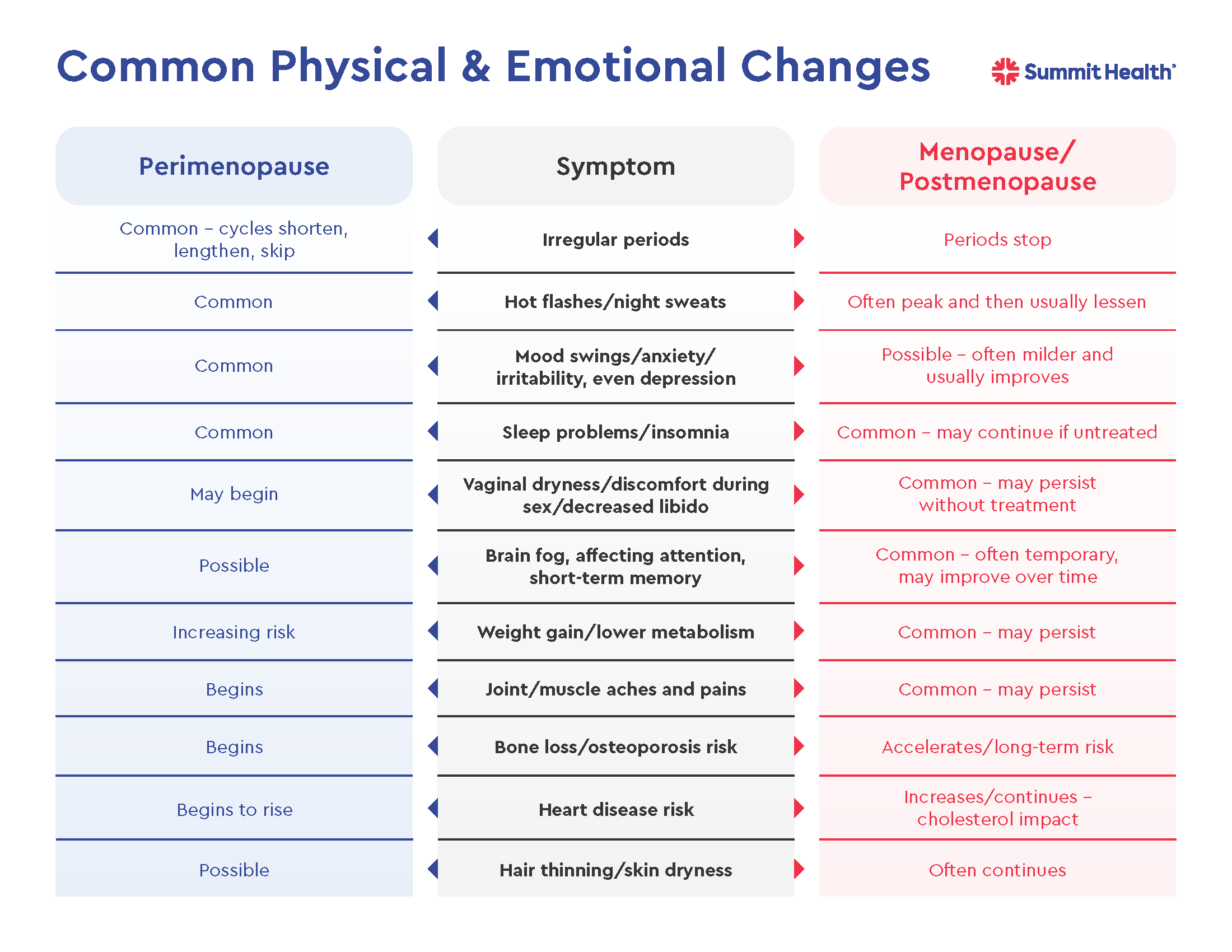
Common Perimenopausal and Menopause Symptoms
Hot Flashes and Night Sweats: The most common hallmark symptoms, characterized by sudden feelings of warmth, redness, and sweating.
Sleep Problems: Disrupted sleep and fatigue may occur and may or may not be related to hot flashes.
Mood Changes: Fluctuations in mood, such as irritability, sadness, anxiety, or even depression, may be linked to declining estrogen.
Cognitive Changes: Difficulty with memory and concentration, sometimes described as "brain fog," can occur, though it is often temporary.
Changes to the Vaginal and Urinary Tracts: Estrogen loss can cause vaginal dryness, pain during sex, and increased risk of urinary infections.
Irregular Periods: During perimenopause, you may experience changes in your menstrual cycle, such as longer or shorter cycles, or differences in flow.
Physical Aches and Pains: Some women report increased muscle and joint aches.
Menopause Hormone Therapy: Clear Answers, Confident Decisions
Join Dr. Mary Margaret McGue and Dr. Kara Goldman FACOG for a free webinar designed to help you understand today’s approach to menopause hormone therapy. We’ll address common concerns, share practical guidance, and more.

Our Specialists


What our patients are saying
She was the most caring and took the time to explain my options for HRT therapy. I felt she has a lot of knowledge with HRT patients. She was very personable. I felt like I can talk her like a friend.
My medical record was thoroughly reviewed and what wasn't clear in the record was clarified by interview. I did recommend this NP to a friend who intends to make an appointment. So glad that a menopause clinic is available.
The entire staff was very friendly and welcoming. My OB-GYN was kind, informative, and thorough. She reviewed my symptoms and health history, explained my options clearly, and recommended a treatment that made sense for me. Overall, I felt listened to, secure, and well cared for.
She was an excellent nurse practitioner and very informative on different steps to provide me relief for my menopausal symptoms. I look forward to our next follow up appointment.
The provider is very knowledgeable and easy to talk to! She's a delight! Her office staff is amazing! So welcoming, warm and accommodating
Our Office Location
