
 What Is Tennis Elbow?
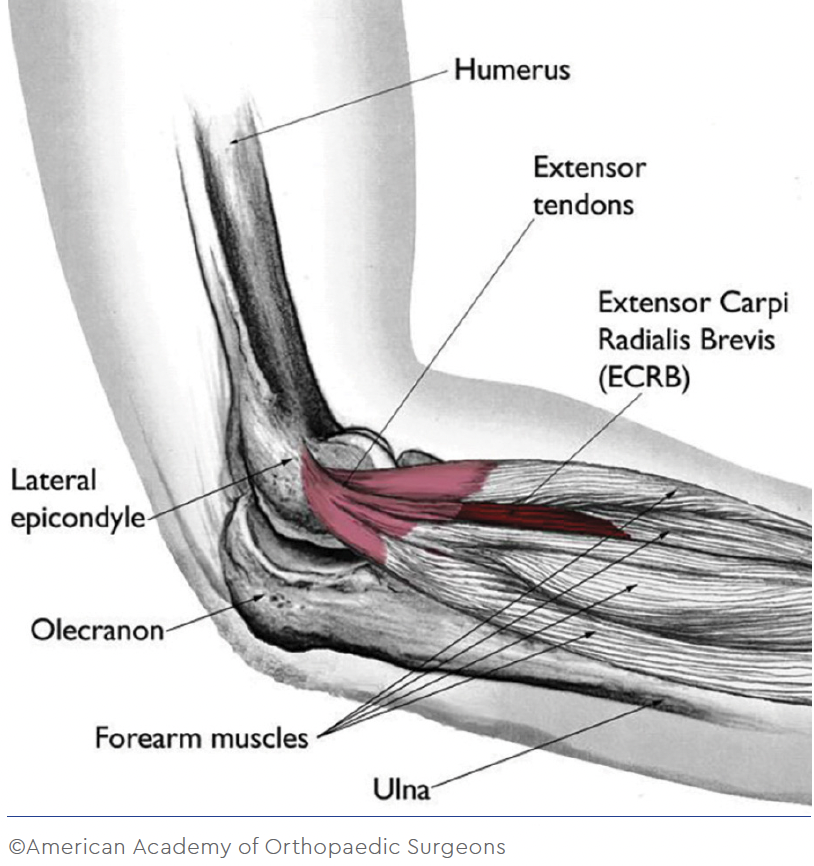
Lateral epicondylitis, or tennis elbow, is a painful condition of the elbow. It is frequently, but not always, associated with overuse. Often, it is simply explained as inflammation of the tendons of the elbow. More specifically, it is due to microscopic tears in the Extensor Carpi Radialis Brevis (ECRB) tendon at its connection to the elbow.
Symptoms
Pain on the outside of the elbow is the hallmark of tennis elbow. The pain may travel down to the forearm and back of hand when grasping or twisting the arm, and the grip may be weak.
Causes
Tennis elbow is an overuse injury. When the arm is moved in the same way or held in the same position over and over again, the tendons of the elbow rub against bone, begin to get frayed and can tear. People between the ages of 35 and 54 are most commonly affected.
The tennis backhand stroke is the most common culprit for tennis players, but tennis players are not the only people who develop tennis elbow. Other activities and occupations that tend to cause tennis elbow include:
- Construction work
- Cooking
- Desk work
- Painting
- Plumbing
Diagnosis
A physical exam is the most common mode of diagnosis for tennis elbow. The doctor will be looking for pain when the tendon is pressed and pain when the wrist is bent backward. A magnetic resonance imaging (MRI) scan may help confirm the diagnosis. Electromyography (EMG) can rule out nerve compression.
Treatment
Conservative treatments are usually tried first. These include:
- Rest
- Ice
- Over-the-counter pain medications
- Physical therapy
- Bracing
- Steroid injections
- A new tennis racket and modification of swing technique
If these measures are tried for 6 to 12 months without success, surgery may be necessary. Surgery can be either open or arthroscopic, and will usually involve the removal of damaged tissue and reattachment of muscles to bones.
If you are seeking care for your tennis elbow, please schedule an appointment with one of our orthopedic providers.
FAQ
Tennis elbow, also called lateral epicondylitis, is a condition that causes pain on the outside of the elbow due to overuse of the arm and forearm muscles.
No. Although it is common in tennis players, many people develop tennis elbow from repetitive activities such as cooking, painting, desk work, or construction.
The most common symptom is pain on the outside of the elbow. Some people also experience pain that travels down the forearm, weakness in the hand or wrist, or discomfort when gripping or twisting objects.
Tennis elbow is caused by repetitive motions that strain the tendons in the elbow. Over time, these tendons can become irritated, frayed, or torn.
Tennis elbow most often affects adults between the ages of 35 and 54, particularly those whose work or hobbies involve repetitive arm or wrist movements.
Doctors typically diagnose tennis elbow through a physical exam that checks for pain around the elbow and wrist. Imaging tests such as an MRI or EMG may be used in some cases.
Most cases improve with conservative treatments such as rest, ice, physical therapy, bracing, and over-the-counter pain medication.
If symptoms do not improve after 6–12 months of non-surgical treatment, surgery may be recommended to remove damaged tissue and repair the tendon.
You should seek medical care if elbow pain persists, worsens, or interferes with your ability to grip, lift, or perform daily activities.